Commercial Roof Repair in Central & Eastern Kansas
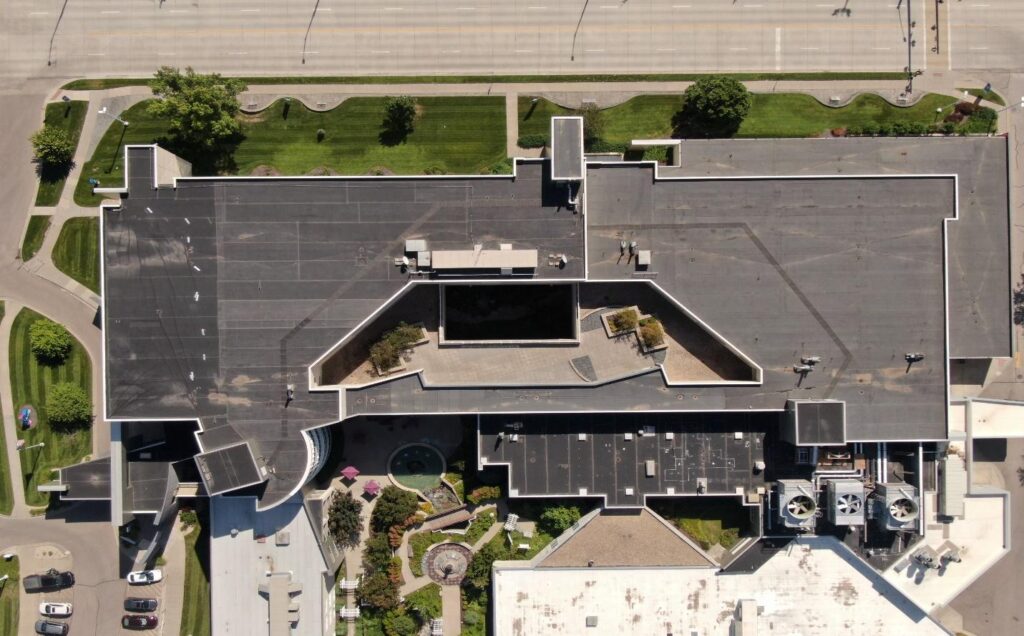
Danker Roofing provides commercial roof repair for leaking and damaged roofs in Manhattan, Topeka, Junction City, Wamego and across Central and Eastern Kansas. We work on TPO, EPDM, PVC, modified bitumen, built-up and metal roofs, and we trace every leak back to its source so the repair actually holds.
That last part matters more than most people expect. Water rarely gets in right above the stain on your ceiling. It can enter at a seam, a flashing, a drain or a rooftop unit, then travel through the roof before it shows up inside. Patch the wrong spot and you’ll be calling a roofer again after the next storm.
What causes most commercial roof leaks?
Most commercial roof leaks start at the details, not in the open field of the roof. Seams, flashings, penetrations and drains take the most stress from weather, thermal movement and foot traffic.
The problems we find most often:
- Open or failing seams
- Worn or loose flashing at walls, curbs and edges
- Damaged membrane around pipes, vents and HVAC units
- Punctures from foot traffic or dropped tools
- Clogged drains and ponding water
- Dried-out sealants and loose metal trim
- Hail and wind damage
Should I repair or replace my commercial roof?
Repair is usually the right call when the damage is limited to one area and the rest of the roof is in good shape. If the same spot keeps leaking after several repairs, or problems are showing up all over the roof, it’s time to look at a bigger fix.
| Option | Usually the right call when… |
|---|---|
| Repair | The damage is in one area: a few leaks, a torn seam, a failed flashing |
| Restoration or coating | The roof is dry and sound, but worn or leaking at seams in several places |
| Replacement | Moisture is trapped across the roof, the membrane has failed widely, or repairs keep failing |
Because we also handle roof coatings and restoration and full replacements, we’re not trying to steer you toward any one answer. We’ll tell you what your roof needs.
How do you repair TPO, EPDM and PVC roofs?
Each single-ply membrane gets repaired with materials and methods that match it. TPO and PVC seams and patches are typically heat-welded, while EPDM repairs use compatible adhesives and seam tape.
Using the wrong material creates a new weak spot right next to the old one, so we match the repair to your roof’s membrane, age and condition. PVC is common on restaurants and other buildings where grease or chemicals reach the roof, and those roofs need repairs that hold up to the same exposure. Learn more about TPO, EPDM and PVC roofing.
Do you repair modified bitumen, built-up and metal roofs?
Yes. Multi-layer roofs like modified bitumen and built-up roofing tend to show surface wear, blistering and flashing failures. Metal roofs usually need attention at seams, fasteners, penetrations and damaged panels. We repair all three.
What happens when you come out for a repair?
We start by finding the cause, not just the symptom. A typical repair visit looks like this:
- We talk through what you’re seeing and check the leak from inside the building
- We inspect the roof around the likely entry points, plus the surrounding area
- We document the damage with photos
- We explain whether the problem looks isolated or part of a bigger pattern
- We recommend a repair scope and price
- We make the repair with materials that match your roof system
If the roof is beyond a reasonable repair, we’ll say so and walk you through restoration or replacement options instead.
Should I have my roof checked after hail or high winds?
Yes. Hail and wind can damage membranes, flashings, metal edges and rooftop equipment without causing an immediate leak, and the damage is often impossible to see from the ground.
Don’t send staff up to look. A storm-damaged roof can be unsafe without proper access and fall protection, and the National Roofing Contractors Association recommends a professional inspection after severe weather. We’ll check the roof and tell you whether it needs small repairs or a larger plan.
How can I prevent repeat leaks?
Regular maintenance is the best way to catch small problems before they turn into leaks. A repair fixes today’s problem; maintenance keeps drains clear, flashings watched and gives you a record of your roof’s condition over time.
Our Annual Maintenance Program is built around your roof’s size, condition and needs.
Why choose Danker Roofing for commercial roof repair?
Danker Roofing has been fixing Kansas roofs since 1969. We install, repair, inspect, maintain and restore commercial roofs across every major low-slope and metal system, working from our Manhattan headquarters and Topeka office.
Request a commercial roof repair
Got an active leak, a leak that keeps coming back, or damage you can see? Call us or request an estimate, and we’ll schedule a visit to find the problem and fix it.
Call us at (800) 576-1969 or (785) 776-9128 today to speak with an experienced commercial roofing expert at Danker Roofing.
Commercial Roof Repair FAQs
What types of commercial roofs do you repair?
We repair TPO, EPDM, PVC, modified bitumen, built-up and metal roofs, along with the flashings, drains and details that go with them.
Can a commercial roof leak be fixed without replacing the roof?
Often, yes. If the damage is limited to one area and the rest of the roof is sound, a repair is usually the most cost-effective fix.
Do you repair restaurant roofs?
Yes. Restaurant roofs take a beating from grease and exhaust, and we repair and install PVC systems designed to handle that exposure.
Why does my roof keep leaking in the same spot?
Usually because the real entry point is somewhere else, or the roof around the old repair is wearing out. Water can travel a long way inside a roof before it shows up indoors.
Is it safe for my staff to check the roof after a storm?
We don’t recommend it. Storm-damaged roofs can hide weak spots and fall hazards. A professional with the right safety equipment should do the inspection.
Can maintenance reduce emergency roof repairs?
Yes. It can’t stop every leak, but regular maintenance catches developing problems early and helps you plan repairs instead of reacting to them.